Which foods spoil fastest in the fridge? How to keep berries, herbs and leafy greens fresh
Berries, herbs and salad leaves are the priciest, fastest-spoiling part of the weekly shop. Here is how to store each one, step by step.
Short answer: Berries, soft herbs, leafy greens, mushrooms and cut fruit spoil fastest, many within 2-3 days. Keep strawberries unwashed in a single layer on paper towel in a vented box, stand coriander, parsley and mint in a jar of water in the fridge, keep basil on the counter, and store dried lettuce wrapped in paper towel in a container.
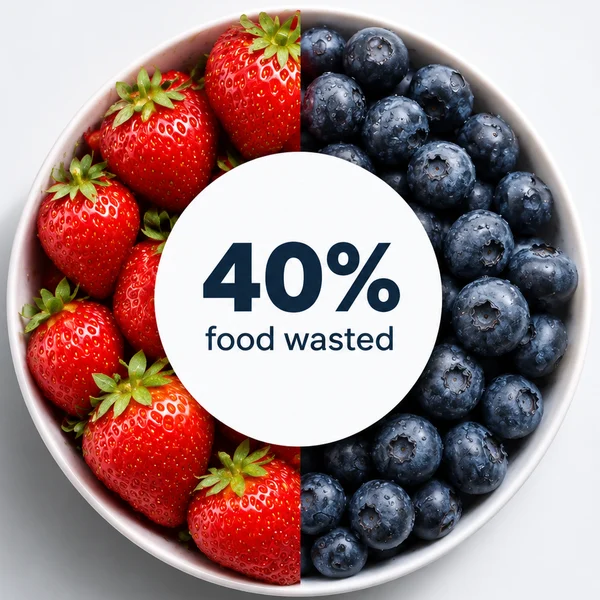
These foods share the same weak points: thin skins or delicate leaves, a lot of water, and a large surface where moisture collects and mould starts. In a UAE fridge that is opened all day, they are the first to go, and often the priciest part of the shop. Here is how to handle each one.
Which foods spoil fastest in the fridge?
This table brings together typical life in a fridge at 4 °C or below, from the Clemson University and University of Maine extension charts, with the method that works best for each food.
| Food | How long it typically lasts | Best method |
|---|---|---|
| Strawberries, raspberries, blueberries | 2-3 days | Unwashed, green tops on, single layer on paper towel, vented box |
| Spinach and other tender greens | 2-5 days | Dry, loosely wrapped in paper towel, in a box or perforated bag, high-humidity drawer |
| Lettuce | 5-7 days | Outer leaves removed, dry, paper towel, box, high-humidity drawer |
| Coriander and parsley | 2-3 days | Stems in a jar of water, leaves loosely covered, in the fridge |
| Basil | Best used within a few days | Stems in water on the counter, out of the sun |
| Mushrooms | 3-7 days | Unwashed, in the unopened pack |
| Cut fruit and cut melon | 3-4 days | Covered container, in the fridge within 2 hours of cutting |
Ranges vary with how fresh the produce was when you bought it and how cold your fridge runs.
How to store strawberries in the fridge
- Sort them the day you buy them. Remove soft, crushed or mouldy berries, as University of Maine Extension advises, before mould reaches the rest.
- Do not wash them yet. Berries are sensitive to moisture and mould sooner if washed before storage, Clemson Extension notes.
- Leave the green tops on. Both extension charts say not to remove them before storing.
- Use a single layer on paper towel. Line a shallow box with paper towel and lay the berries out without piling them, so they do not crush each other or sit in moisture.
- Let the box breathe. Use a vented lid, or leave the lid slightly open, and put the box in a fridge at 4 °C or below.
- Wash just before eating. Rinse gently under cool running water. Do not soak raspberries: spray them in a colander instead.
What about a vinegar rinse?
You will see vinegar rinses recommended online. University of Maine Extension says a diluted vinegar soak (half a cup of white vinegar to two cups of water, followed by a clean-water rinse) reduces but does not eliminate bacteria on leafy greens, and can slightly affect taste and texture. We could not find good evidence that it makes berries last longer. If you try it, rinse in clean water and dry the berries completely before they go back in the fridge, because wet berries mould faster.
Can strawberries last 7 days in the fridge?
Do not count on it. Extension charts give 2-3 days for berries, and imported berries have already spent part of their life in transit. Plan to eat them early in the week and check the box daily.
Is an airtight container better for strawberries?
Not a fully sealed one. A sealed box traps the moisture berries give off, and condensation is where mould starts. UC Davis also warns that sealed bags trap carbon dioxide and increase off-odours and decay. A vented box, or a lid left ajar over a paper towel lining, works better.
How to keep coriander, parsley and mint fresh in the fridge
Treat soft herbs like a bunch of flowers. The Clemson and University of Maine extension services both suggest standing them upright in a glass of water, stems down, loosely covered with a plastic bag.
- Remove the rubber band and any yellow or slimy leaves.
- Trim the ends of the stems.
- Stand the bunch in a jar with a few centimetres of water.
- Cover the leaves loosely with a bag, not tightly.
- Keep the jar in the fridge and change the water every couple of days.
This works for coriander, parsley and mint, the herbs most UAE kitchens buy in big bunches for salads, tabbouleh, rice dishes and tea. Basil is the exception: UC Davis lists it as a room-temperature herb, kept in water. In summer, keep the jar away from sunny windows and the hob.
Extension charts give coriander and parsley only 2-3 days, so buy herbs close to when you need them and use the jar method to make the most of that window.
How to keep lettuce and spinach fresh
- Remove outer and wilted leaves.
- If you wash the leaves, dry them thoroughly in a salad spinner or with a clean towel. Wet leaves turn slimy fast.
- Wrap them loosely in paper towel to absorb moisture.
- Store them in a box or perforated bag in the high-humidity drawer, the setting Colorado State University Extension recommends for produce that wilts.
- Keep them away from apples, avocados and tomatoes, which release ethylene that makes greens yellow sooner.
- Change the paper towel when it gets damp.
Keeping lettuce fresh for a month is not realistic, whatever social media says. Charts give 5-7 days for lettuce and 2-5 days for spinach and other tender greens, so plan salads for the first half of the week.
Mushrooms and cut fruit
Mushrooms keep 3-7 days, and Clemson notes that unopened packs last longer. Keep them unwashed until you cook them, and once the pack is open, cover them loosely so moisture can escape.
Cut fruit is the one item here that is also a food safety question. Store it in a covered container and get it into the fridge within 2 hours of cutting, as University of Maine Extension advises, then eat it within 3-4 days. If a fruit platter has been sitting out above 32 °C, at an outdoor gathering or on a terrace in summer, USDA guidance shortens that window to 1 hour.
Why do these foods struggle more in UAE homes?
Many berries and herbs in UAE supermarkets are imported, so they arrive with part of their life already used. Summer heat in the car on the way home adds to it. Then, in a fridge opened all day by a big family, or during Ramadan and Eid hosting, warm, moist air comes in each time, and condensation settles on exactly the foods that hate it. That is why the drying, lining and venting steps above matter more here than in a cooler climate.
What Vitesy's strawberry test showed
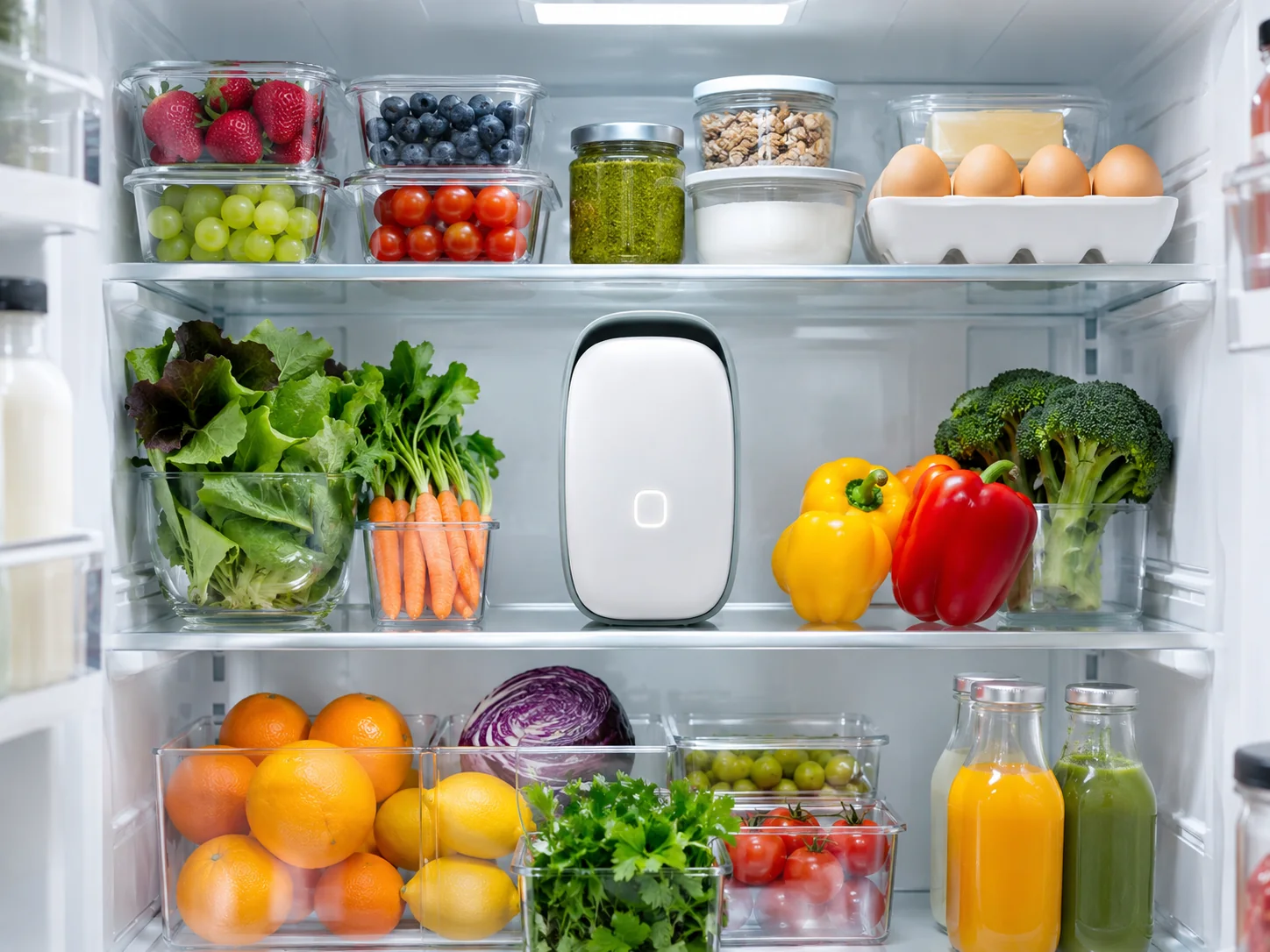
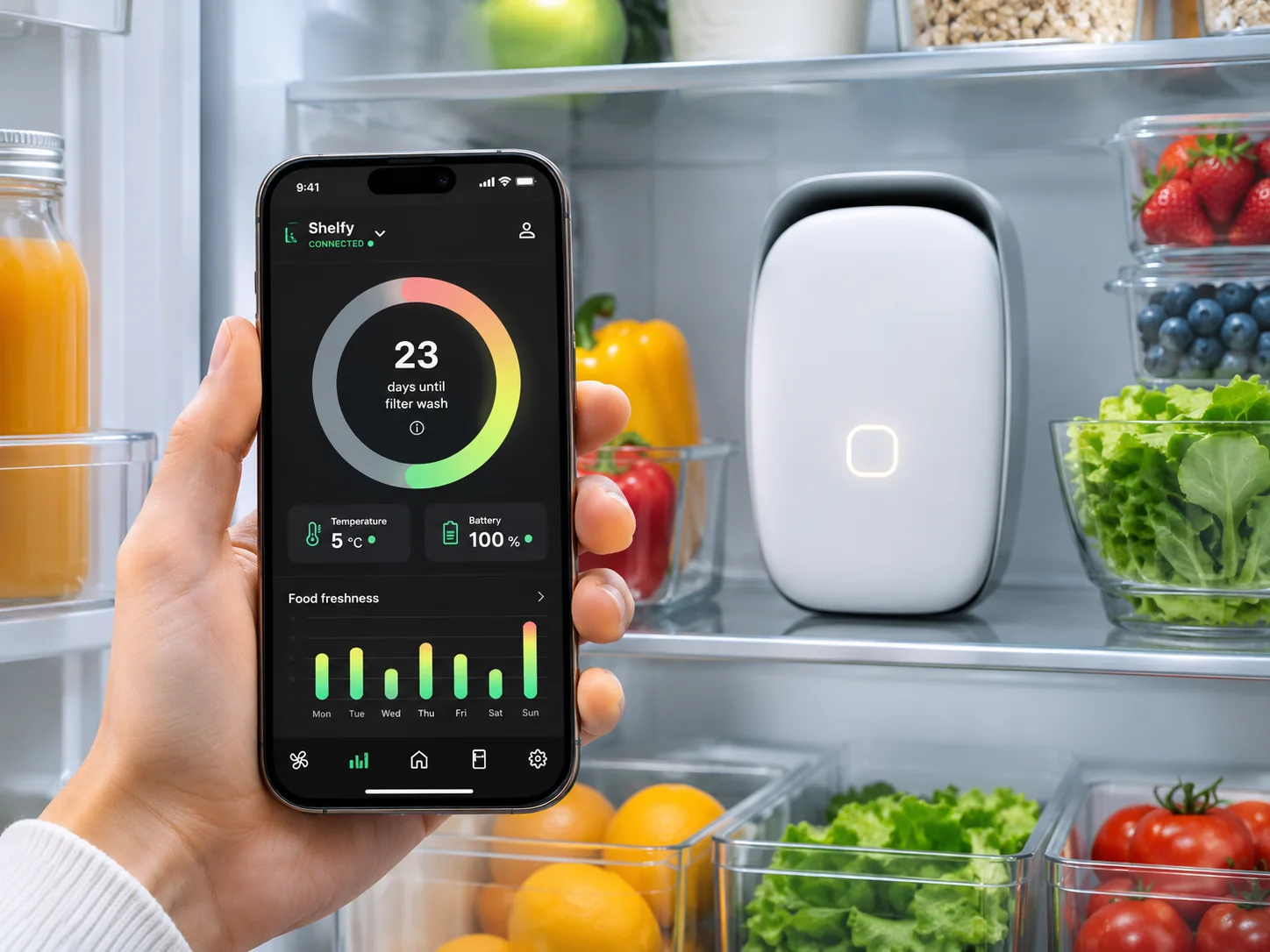
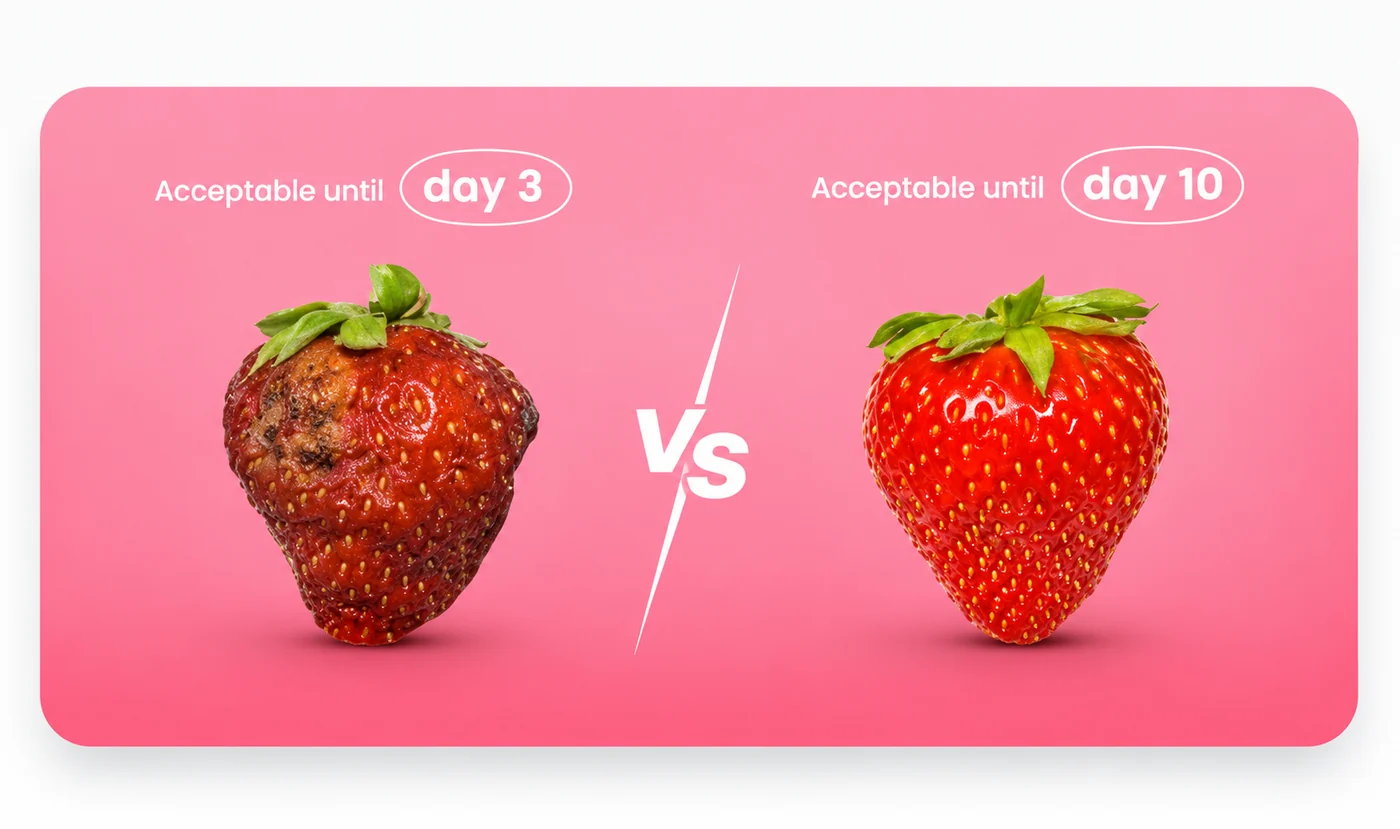
Storage habits come first. Shelfy, a fridge air purifier, adds a second layer by treating the air around the food. In Vitesy's lab tests on the original Shelfy model, run with CSI (IMQ Group) in two identical lab fridges at 6 °C, each with an avocado added as an ethylene source, strawberries stayed acceptable until day 10 with Shelfy, compared with day 3 without it.
Two caveats. The lab fridges ran at 6 °C, warmer than the 4 °C you should aim for at home, and Vitesy says Shelfy acts on the air, not the food, and that results may vary. It does not replace the steps above. You can read the full method in the VITESY test reports, see how the filter works in our Shelfy explainer, or read PRO TECHnology's look at whether Shelfy works.
For a wider produce-by-produce table, see our fridge storage guide. In the UAE, VITESY is distributed by PRO TECHnology, a Dubai company.
Frequently asked questions
How can I keep strawberries fresh longer in the fridge?
Sort them on the day you buy them and remove any soft or mouldy berries. Do not wash them or remove the green tops. Lay them in a single layer on paper towel in a shallow box with a vented or slightly open lid, and keep the fridge at 4 °C or below. Wash them gently under running water just before eating.
Can strawberries last 7 days in the fridge?
Usually not. Clemson and University of Maine extension charts give 2-3 days for berries in the fridge. Very fresh, dry berries in a cold fridge may last a little longer, but imported berries have already spent time in transit. Plan to eat them in the first few days after buying, and check the box daily for soft or mouldy fruit.
Is it better to store strawberries in an airtight container?
Not a fully airtight one. Strawberries give off moisture, and in a sealed box it condenses and encourages mould. UC Davis also notes that sealed bags trap carbon dioxide, which increases off-odours and decay. A container with vents, or a lid left slightly open, lined with paper towel, keeps berries drier and lets them breathe.
How to keep coriander fresh in the fridge?
Remove the rubber band and any yellow leaves, trim the stems and stand the bunch in a jar with a few centimetres of water, like flowers. Cover the leaves loosely with a plastic bag and keep the jar in the fridge, changing the water every couple of days. Parsley and mint keep the same way. Basil is different: keep it in water on the counter.
How do you keep lettuce fresh in the fridge?
Remove outer and wilted leaves. If you wash the lettuce, dry it thoroughly with a salad spinner or clean towel. Wrap it loosely in paper towel, put it in a box or perforated bag in the high-humidity drawer, and keep it away from apples, avocados and tomatoes. Extension charts give lettuce about 5-7 days, so plan salads early in the week.
Which foods spoil fastest in the fridge?
Berries, soft herbs such as coriander and parsley, spinach and other tender greens, mushrooms and cut fruit. Extension charts give berries and soft herbs about 2-3 days, tender greens 2-5 days, cut fruit 3-4 days and mushrooms 3-7 days. They spoil fast because they have thin skins or delicate leaves, a lot of water and a large surface for moisture and mould.
Sources
- Clemson University Cooperative Extension: Selecting & Storing Fruits & Vegetables (HGIC 3483)
- University of Maine Cooperative Extension: Storing and Washing Fresh Fruits and Vegetables
- University of California ANR (UC Davis Postharvest Technology Center): Storing Fresh Fruits and Vegetables for Better Taste, Publication 21590
- Colorado State University Extension: Maximizing Fruits & Veggies
- USDA Food Safety and Inspection Service: "Danger Zone" (40 °F - 140 °F)
- VITESY: Shelfy Test Report 2023 (shelf-life test with CSI S.p.A., IMQ Group)