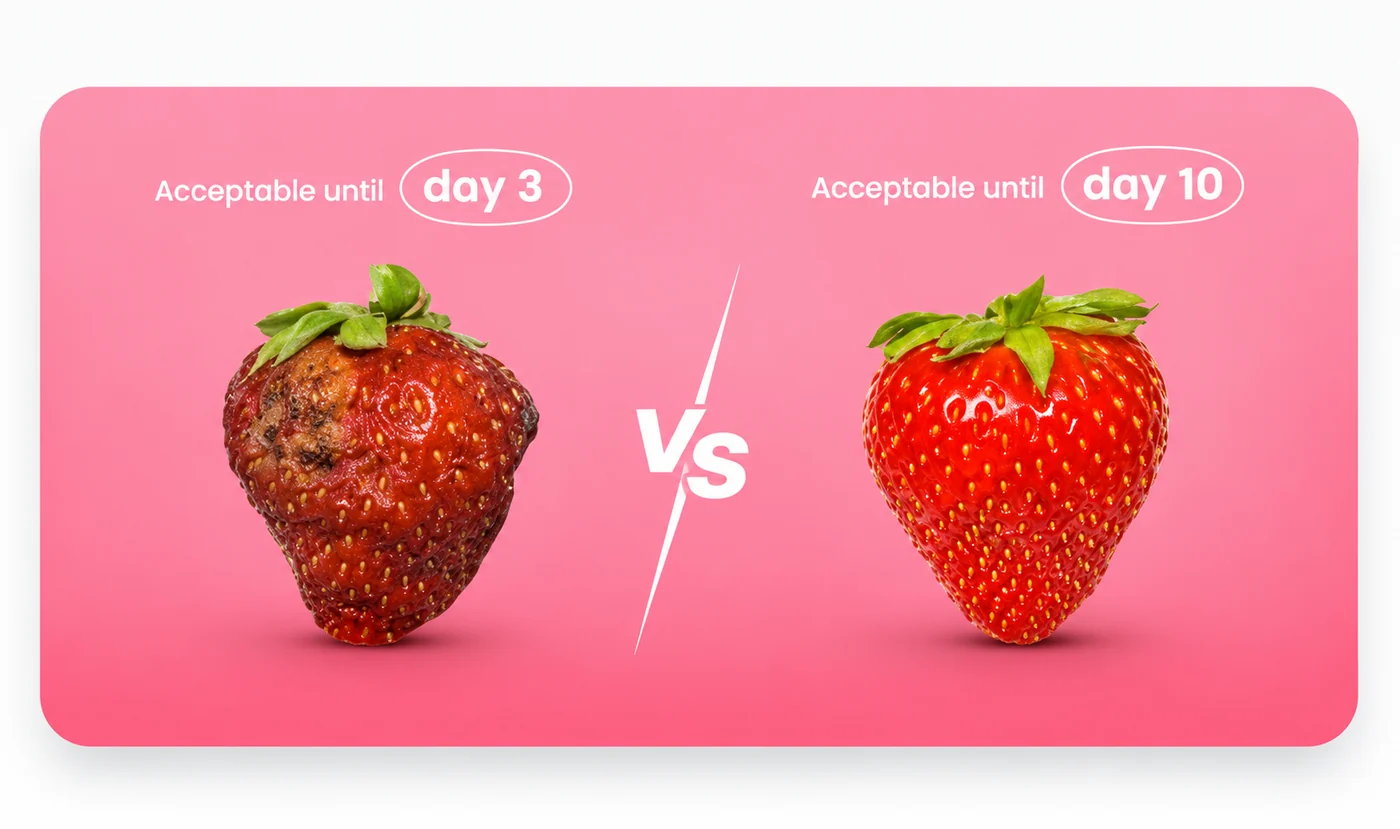
How long do fruit and vegetables last in the fridge? A fridge storage guide for UAE homes
A produce-by-produce table of fridge life in days, plus the temperature, humidity and bag habits that stretch a weekly shop in a UAE kitchen.
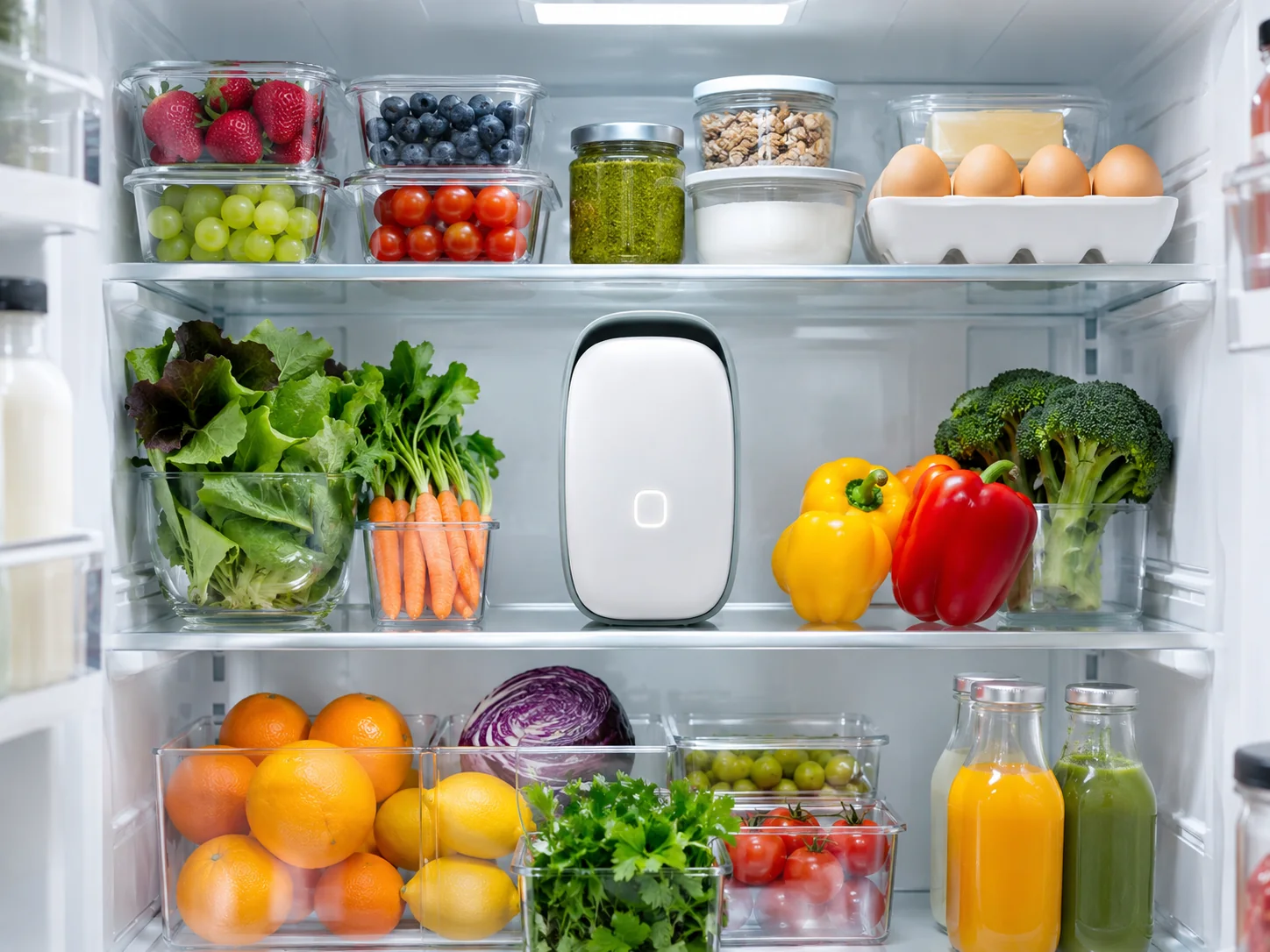
Short answer: In a fridge at 4 °C or below, berries, coriander and parsley keep about 2-3 days, spinach 2-5 days, lettuce 5-7 days, broccoli 3-5 days, grapes and peppers about a week, carrots 1-2 weeks and apples up to a month. Tomatoes, onions, potatoes and unripe mangoes, avocados and bananas stay out of the fridge.
These are typical ranges from Clemson University's extension service for produce bought in good condition. Real fridge life depends on ripeness at purchase and how cold your fridge runs, and in the UAE both usually work against you, so plan around the lower number.
How long do fruit and vegetables last in the fridge?
Use this table as a quick reference after the weekly shop. "Fridge drawer" means the crisper drawers at the bottom of the fridge.
| Produce | Where to store it | Typical life in the fridge |
|---|---|---|
| Strawberries and other berries | Fridge drawer, unwashed, green tops left on | 2-3 days |
| Grapes | Fridge drawer | About 1 week |
| Lettuce | Fridge drawer, high humidity | 5-7 days |
| Spinach and other leafy greens | Fridge drawer, high humidity | 2-5 days |
| Coriander and parsley | Fridge, stems in a glass of water or in a bag | 2-3 days |
| Broccoli | Fridge drawer, loose perforated bag | 3-5 days |
| Carrots | Fridge drawer, green tops removed | 1-2 weeks |
| Cucumbers | Fridge drawer, away from apples and tomatoes | Up to 1 week |
| Capsicum (sweet peppers) | Fridge drawer | About 1 week |
| Mushrooms | Fridge, in the unopened pack | 3-7 days |
| Apples | Fridge drawer, low humidity, away from greens | Up to 1 month |
| Oranges, lemons and limes | Counter for a few days, fridge drawer to keep longer | 2-8 weeks |
| Mangoes | Counter until ripe, then fridge | 2-3 days once ripe |
| Avocados | Counter until ripe, then fridge | 3-5 days once ripe |
| Bananas | Counter; fridge only once ripe (the skin darkens, the flesh does not) | No set figure: eat within days |
| Tomatoes | Counter, out of direct sun | Only once cut: 2-3 days |
| Onions and potatoes | Cool, dark, ventilated cupboard, in separate baskets | Not for the fridge: onions 2-4 weeks, potatoes 1-2 weeks at 10-15 °C |
Source: Clemson University Cooperative Extension, factsheet HGIC 3483; cucumbers from University of Maine Cooperative Extension. The ranges assume a fridge at or below 4 °C and vary with ripeness, variety and how cold your fridge actually is. UC Davis prefers room temperature for whole cucumbers, peppers and citrus, but in a warm UAE kitchen the fridge drawer is safer if you will eat them within days.
For the counter and cupboard items, see our guide to what to keep out of the fridge.
Why does produce spoil faster in a UAE kitchen?
Three things shorten these ranges here.
- Long journeys. Much of the fruit and veg in UAE supermarkets is imported, so it has often spent days in transit before it reaches the shelf. It tends to arrive riper, which means part of its fridge life is used up before you buy it.
- The drive home. With summer highs regularly above 45 °C, a car boot heats up fast, and heat speeds up ripening and wilting. Buy produce last, bring a cool bag in summer and go straight home.
- Busy fridges. Big families, domestic helpers cooking through the day, iftar preparation in Ramadan and Eid hosting all mean the door opens constantly. Each opening lets warm air in, and a crammed fridge cannot move cold air around.
Bulk buying adds to it. In the UAE's first national household survey by Ne'ma, half of residents said they buy on special offers and in bulk, and vegetables (34%) and fruit (31%) were among the foods most commonly wasted at home, after bread and bakery.
What temperature should your fridge be?
At or below 4 °C, with the freezer at -18 °C, as the US Food and Drug Administration advises. A cheap fridge thermometer on the middle shelf is the only way to know, because the dial shows a setting, not a temperature. Check it on a hot afternoon after a busy cooking day, when the fridge is under the most strain.
Do not pack the shelves so tightly that air cannot circulate.
How to use the crisper drawers
If your fridge has two drawers with humidity sliders, set them differently. Colorado State University Extension advises high humidity for produce that wilts, such as leafy greens, herbs and asparagus, and low humidity for produce that rots, such as apples, pears, avocados and melons. On most fridges, high humidity means the vent is closed.
UC Davis also suggests one drawer for fruit and one for vegetables, so the ethylene that fruit gives off does not reach the greens. In practice: a low-humidity fruit drawer and a high-humidity vegetable drawer.
Ethylene: keep the ripeners away from the wilters
Ethylene is a natural gas that ripening fruit releases. Apples, pears, apricots, avocados, cantaloupe, nectarines, papayas, peaches, ripe bananas and tomatoes produce a lot of it. Leafy greens, lettuce, cucumbers, carrots, broccoli and herbs are sensitive to it, and yellow or wilt sooner when it builds up in a closed fridge.
You can also use it on purpose. To ripen hard avocados or mangoes, UC Davis suggests a bowl or paper bag with one ripe apple for every 5 to 7 pieces of fruit. Fuji and Granny Smith apples give off little ethylene, so pick another variety.
Should vegetables be stored in plastic bags in the fridge?
Yes, but in bags that breathe. UC Davis recommends perforated plastic bags in the produce drawers; if yours have no holes, make about 20 pin holes in a medium bag. A sealed bag traps moisture and carbon dioxide, which leads to off-odours and decay, and wet leaves in a sealed bag turn slimy within days.
A paper towel inside the bag or box soaks up condensation from all those door openings.
Wash just before eating, not before storing
Washing before storage adds moisture, and moisture means mould. Berries and green beans are the most sensitive. Wash produce under running water just before you prepare it, rather than soaking it, and dry it with a clean paper towel. If you prep the week's salads at the weekend, dry the leaves thoroughly (a salad spinner helps) and store them in a lined container.
For step-by-step methods for the fastest spoilers, read our guide to storing berries, herbs and leafy greens.
How to keep vegetables fresh in the fridge for longer: a 10-minute routine
- Buy produce last and, in summer, carry it home in a cool bag.
- Sort as you unpack: counter (bananas, tomatoes, unripe mangoes and avocados), cupboard (onions, potatoes, garlic), fridge (everything else in the table).
- Remove any bruised or mouldy pieces before the damage spreads.
- Put fruit in the low-humidity drawer and vegetables in the high-humidity drawer.
- Stand coriander, parsley and mint in a glass of water, loosely covered with a bag.
- Put the fastest spoilers at the front and plan to eat berries and leafy greens in the first two or three days.
- Check the drawers every two or three days and use what is turning first.
Where Shelfy fits
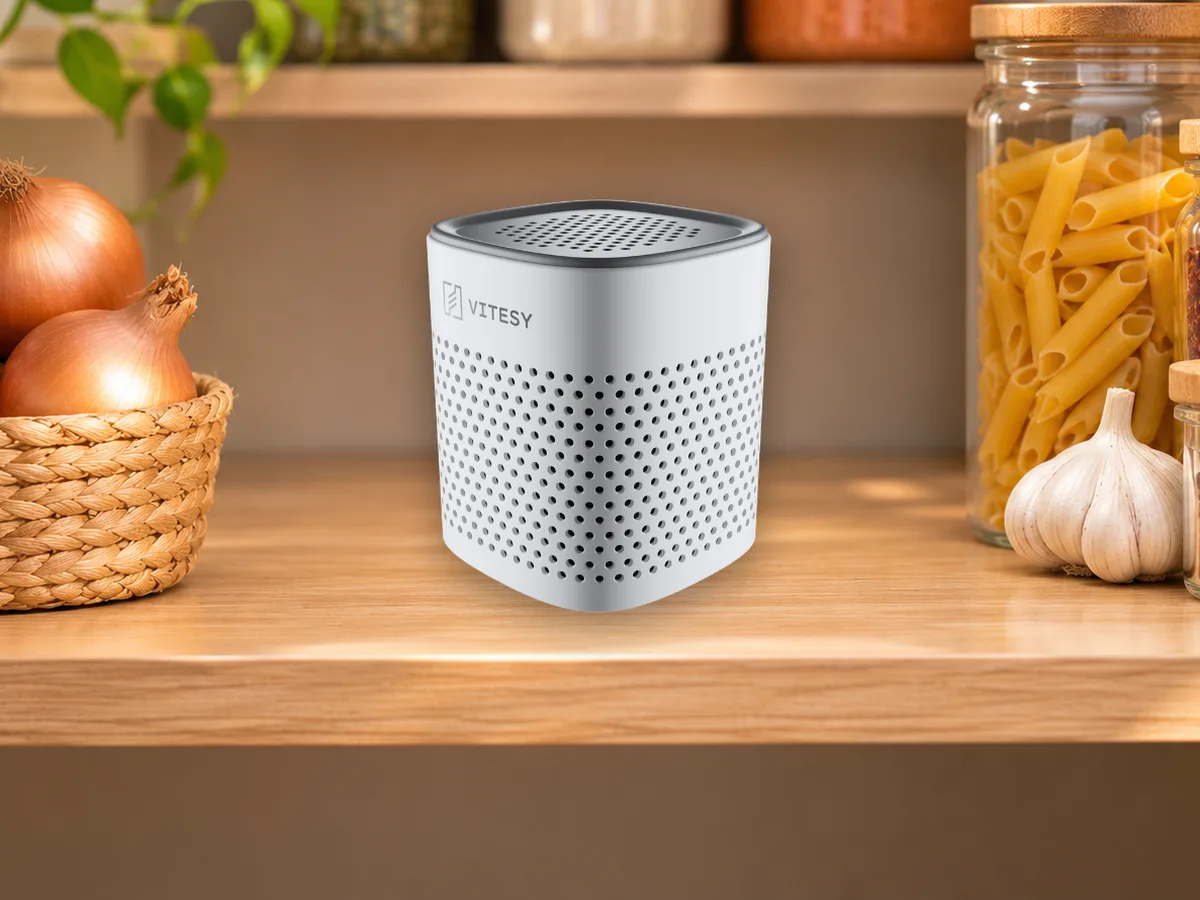
Good storage habits do most of the work. Shelfy is a fridge air purifier that works on the air around your food: a small fan pulls fridge air through a washable ceramic filter coated with a photocatalyst, which is activated by visible blue LEDs. It uses no ozone and no UV.
In Vitesy's lab tests on the original Shelfy model, run in lab fridges at 6 °C with an avocado added as an ethylene source, courgettes stayed acceptable for 22 days instead of 10, and Belgian endive for 7 days instead of 3. In a separate Vitesy test in a 210-litre box, ethylene fell by 56.3% in 14 hours. Vitesy notes that Shelfy acts on the air, not the food, and that results may vary, so a fridge at 4 °C or below still matters most.
For UAE homes, the Vitesy Hub app helps too: it shows fridge temperature and door openings, so you can see what a busy hosting day does to your fridge. One Shelfy covers about 300 litres; fridges above 350 litres need two.
For more on temperature and drawers, PRO TECHnology's guide to keeping fruit and vegetables fresh longer is useful further reading. In the UAE, VITESY is distributed by PRO TECHnology, a Dubai company.
Frequently asked questions
How long can fresh vegetables last in the fridge?
It depends on the vegetable. In a fridge at 4 °C or below, Clemson University Extension gives 2-5 days for spinach and other leafy greens, 5-7 days for lettuce, 3-5 days for broccoli, about a week for peppers and 1-2 weeks for carrots. Produce that arrives riper, as imported produce in the UAE often does, sits at the lower end of these ranges.
How to keep vegetables fresh in the fridge for a long time?
Keep the fridge at 4 °C or below, store vegetables unwashed in perforated bags in a high-humidity drawer, and keep them in a different drawer from fruit that releases ethylene, such as apples and avocados. Remove anything bruised, line boxes with paper towel to catch condensation and check the drawers every few days, using what is turning first.
Should vegetables be stored in plastic bags in the refrigerator?
Use perforated bags rather than sealed ones. UC Davis recommends perforated plastic bags in the produce drawers and suggests making about 20 pin holes in a medium bag if yours has none. Sealed bags trap moisture and carbon dioxide, which leads to slimy leaves, off-odours and decay. A paper towel inside the bag helps absorb extra moisture.
What three vegetables should never be refrigerated?
Tomatoes, onions and potatoes are the usual answer. Whole tomatoes lose flavour in the cold, while dry onions and potatoes keep best in a cool, dark, ventilated cupboard, in separate baskets. Garlic, bananas and unripe mangoes and avocados also belong out of the fridge. Once cut, tomatoes and onions should go in the fridge in a covered container.
How to store fruits in the fridge?
Ripen mangoes, avocados, peaches and pears on the counter first, then move them to the fridge to hold them. Keep fruit in its own low-humidity drawer, away from vegetables, because many fruits release ethylene. Store berries unwashed with their green tops on and wash any fruit just before eating. Bananas and whole citrus can stay on the counter for a few days.
What temperature should a fridge be in the UAE?
At or below 4 °C, with the freezer at -18 °C, as the US FDA recommends. In UAE summers the fridge works harder, especially with frequent door openings, so check it with a thermometer on the middle shelf rather than trusting the dial. If it reads above 4 °C, turn the setting colder and make sure air can circulate around the shelves.
Sources
- Clemson University Cooperative Extension: Selecting & Storing Fruits & Vegetables (HGIC 3483)
- University of California ANR (UC Davis Postharvest Technology Center): Storing Fresh Fruits and Vegetables for Better Taste, Publication 21590
- University of Maine Cooperative Extension: Storing and Washing Fresh Fruits and Vegetables
- Colorado State University Extension: Maximizing Fruits & Veggies
- US Food and Drug Administration: Are You Storing Food Safely?
- Khaleej Times: First-ever UAE household survey reveals how residents eat, waste food