Food waste in UAE homes: the real numbers and easy ways to waste less
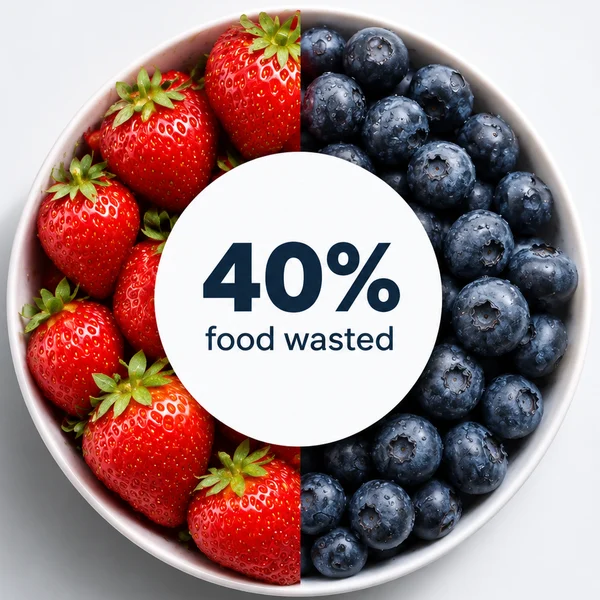
Around 40% of the food prepared in the UAE is wasted, at a cost of Dh6 billion a year. Here is what the national figures say about our homes, and the everyday habits that change them.
Short answer: Measured national figures are not out yet, but UNEP's Food Waste Index 2024 estimates UAE households waste about 99 kg of food per person a year (a low-confidence estimate), close to half a tonne for a family of five. Bread, vegetables and fruit are wasted most, linked to impulse buying, cooking extra and forgotten food.
Most of us want to waste less, and the causes are habits you can change this week. To see what waste costs your own household, try the VITESY food waste calculator.
How much food waste is there in the UAE?
The most detailed local data comes from How the UAE Eats, the first national household food waste survey, run in 2023 by Ne'ma, the National Food Loss and Waste Initiative, with the UAE's Behavioural Science Group. It covered 6,083 residents across the emirates.
| Figure | What it means | Source |
|---|---|---|
| About 40% | Food prepared in the UAE that is wasted each year | Ne'ma, 2023 |
| Dh6 billion | Yearly cost of that waste | Ne'ma, 2023 |
| 99 kg | UAE household food waste per person per year (low-confidence estimate) | UNEP, 2024 |
| About 930,000 tonnes | The same estimate for all UAE households in a year | UNEP, 2024 |
| 36%, 34%, 31% | Residents who threw away bread, vegetables and fruit in the past 7 days | Ne'ma, 2023 |
| 52% | Usually buy food based on special offers | Ne'ma, 2023 |
| 57% | Order takeaway more than once a week | Ne'ma, 2023 |
| 16% | Understood "use by" and "best before" labels (65% check them) | Ne'ma, 2023 |
| 50% by 2030 | The UAE's target for cutting food waste | Ne'ma |
| About 60% (global) | Share of the world's food waste that happens in homes | UNEP, 2024 |
| 79 kg (global) | World average household food waste per person per year | UNEP, 2024 |
UNEP rates the UAE figure low confidence because it is extrapolated from other countries rather than measured here, and it counts inedible parts such as peels and bones. Ne'ma began a national baseline study in 2025 that measures waste inside homes, and its results should give the first measured figures (Gulf News, August 2026). UNEP also found a slight, not yet conclusive link between hotter countries and more household waste, possibly because food spoils sooner in the heat, which matters where summer highs pass 45 °C.
What food do UAE households waste most, and why?
Bread and bakery items top the list, then vegetables and fruit; meat and seafood are thrown away less often. The main reasons residents gave: meals not finished, plans changing, leftovers after large gatherings, and food left too long in the fridge or freezer or going off before its date.
It is not a lack of will. 67% of citizens and 55% of expats find it difficult to avoid food waste, and hospitality plays a part: 65% of citizens and 51% of expats say being hospitable to guests matters even if food is wasted.
How to reduce food waste at home: 10 fixes matched to the survey
1. Shop your fridge first
About 6 in 10 residents plan meals and write a list, yet 1 in 4 buy food without knowing what they will use it for. Photograph your fridge before you leave, plan the week's dinners, and write the list from those meals.
2. Give bulk buys and offers a job
Half of residents buy on special offer. A multi-pack is only a saving if you eat it, so name the meals it will become, or freeze part of it the day you get home.
3. Know use by from best before
65% of residents check date labels, but only 16% understood both terms, and 43% thought both meant the food is unsafe after the date.
- Use by is about safety: do not eat the food after this date, even if it looks fine. It appears on highly perishable chilled foods such as fresh meat and fish.
- Best before is about quality: the food is still safe afterwards as long as it is not damaged, deteriorated or spoiled. Think rice, pasta, biscuits and tins.
Use-by dates assume the food was stored as the label says, so keep the fridge at or below 4 °C.
4. Order takeaway for the table, not the eyes
57% of residents order takeaway more than once a week, and many order enough for several meals. Order one dish less. Refrigerate leftovers within 2 hours, or within 1 hour if they sat somewhere above 32 °C, such as a car in summer (USDA).
5. Cook for the people actually eating
4 in 10 residents cook extra "just in case", rising to nearly half of citizens. For family dinners and iftars, count heads first, cook a little less, and keep a quick back-up such as eggs or frozen parathas.
6. Store each food where it lasts
3 in 10 residents struggle to find room in their fridge, and 44% do not regularly use storage tools such as sealable containers. Keep bananas, mangoes, tomatoes, onions and potatoes out of the fridge, and give fruit and vegetables separate drawers. Our fridge storage guide for UAE kitchens maps where everything goes, and how to store berries, herbs and leafy greens covers the items that spoil fastest.
7. First in, first out
Move older food to the front when you unpack. Keep one clear "eat first" box for opened jars, half-used vegetables and leftovers, and build one meal a week around it.
8. Freeze bread and leftovers early
Bread is the most commonly wasted item, and the Ne'ma report suggests freezing and toasting could be an effective fix. Slice loaves and freeze what you will not eat in a day or two. Leftovers frozen in dated single portions keep best quality for 3 to 4 months (USDA).
9. Make leftovers a planned meal
Only about half of residents regularly eat the leftovers they save, and many who do not worry about eating food past its date. Label containers with the day you cooked and eat them within 3 to 4 days (USDA).
10. Share surplus food safely
37% of residents who do not donate to food banks say they do not know how. The UAE Food Bank, managed by Dubai Municipality, accepts surplus food from individuals and organisations. Share only safe food, and check what it accepts first.
The government's four steps for households
In August 2026 the Ministry of Climate Change and Environment urged households to take four steps (Gulf News):
- Plan shopping: check the fridge and cupboards first and avoid overbuying (fixes 1 and 2).
- Prepare meals with a plan: cook for the number of people eating and reuse leftovers in new meals (fixes 5 and 9).
- Share surplus: give away food that is still safe and compost scraps that are not (fix 10).
- Store food properly: organise the fridge and pantry and track expiry dates (fixes 3, 6 and 7).
For a weekly fridge routine, see fridge organisation tips for busy UAE families.
Estimate what your household wastes
The food waste calculator asks one question, how much you spend on fruit and vegetables each week, and estimates the cost of what is wasted over 3, 6 and 12 months. It works from an assumed waste rate, not your real bin, so treat the result as a ballpark.
Where the Fresh Kitchen Bundle fits
Habits do most of the work. For extra help, the Fresh Kitchen Bundle pairs two VITESY products:
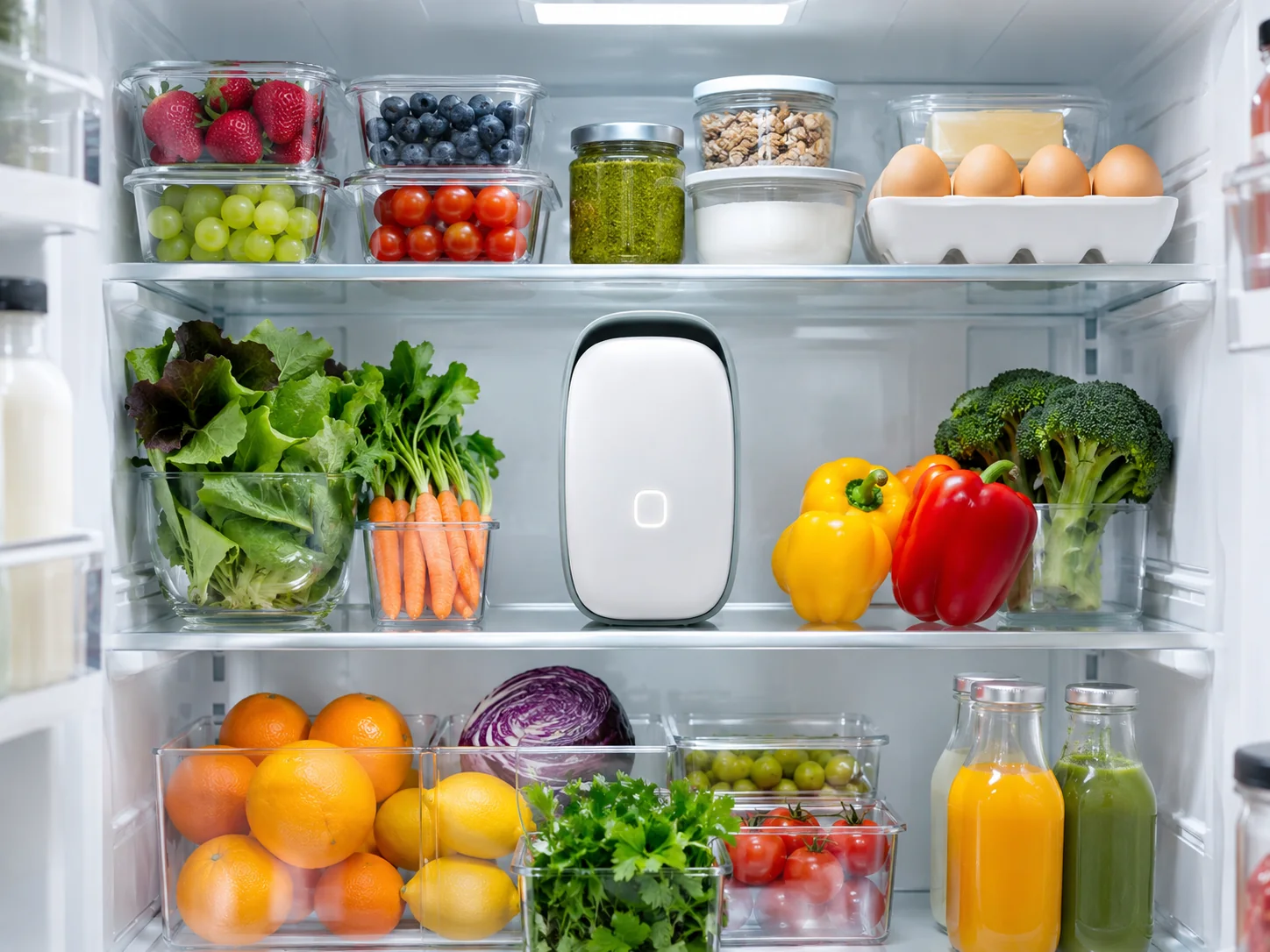
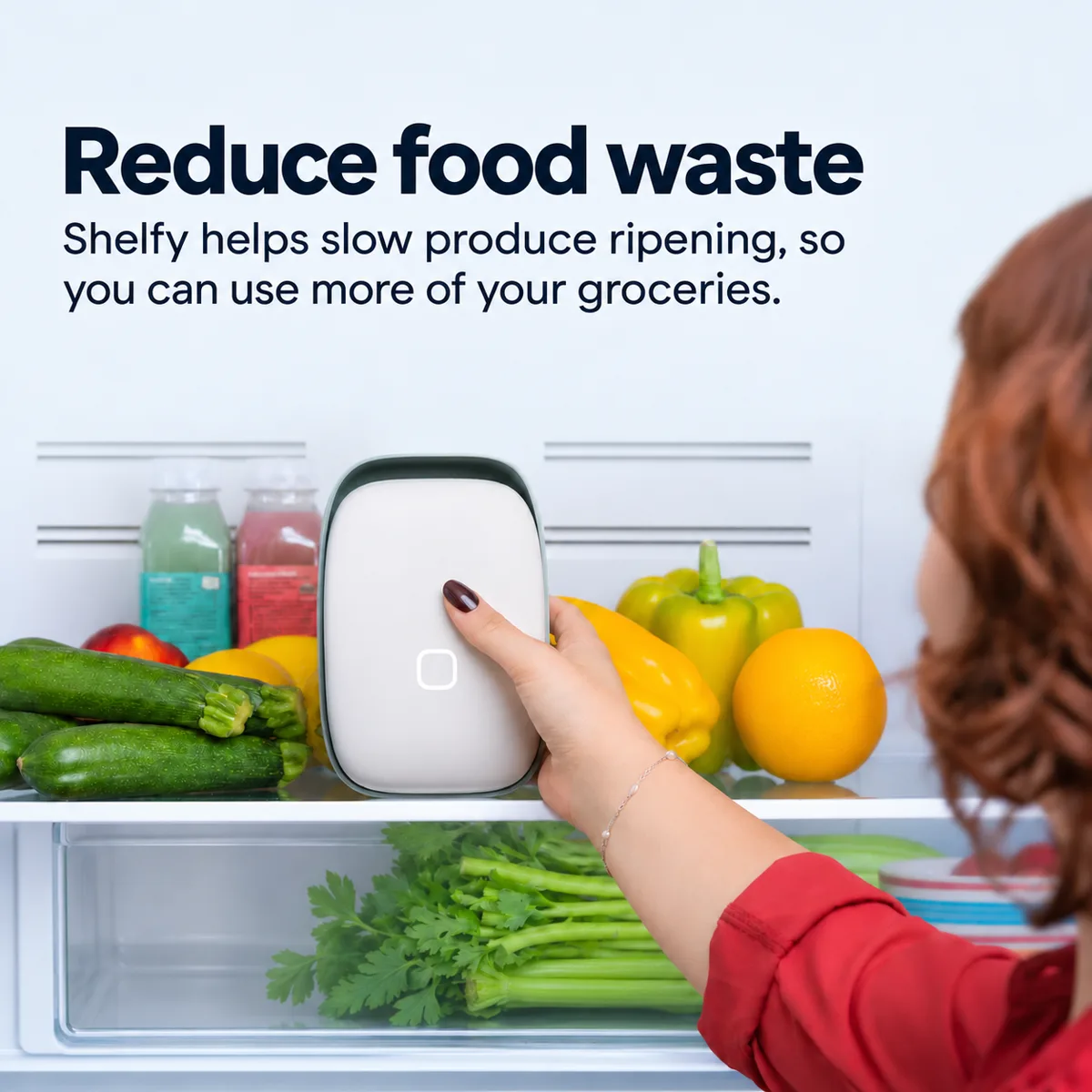
- Shelfy, a fridge air purifier, uses a fan and a washable photocatalytic filter activated by blue LEDs, with no ozone or UV. In Vitesy's lab tests on the original Shelfy model, in fridges at 6 °C with an avocado added as an ethylene source, strawberries lasted 10 days instead of 3 and courgettes 22 instead of 10. Vitesy says it acts on the air, not the food, and results may vary.
- Deo is a passive odour eliminator for the bin cupboard or a second fridge, with no power, refills or fragrance. In Vitesy's lab report, fish and rotten-cabbage odour compounds in a sealed 60-litre box fell below the detection limit within 2 hours; Vitesy's own guide says it may significantly reduce odours without necessarily eliminating them completely.
The test reports are on our research page. In the UAE, VITESY is distributed by PRO TECHnology, a Dubai company.
Frequently asked questions
How much food waste is there in the UAE?
Ne'ma's 2023 national survey reports that about 40% of food prepared in the UAE is wasted each year, at a cost of around Dh6 billion. For homes, UNEP's Food Waste Index 2024 estimates 99 kg per person per year, about 930,000 tonnes in total, but rates this as low confidence because it is extrapolated from other countries. Ne'ma's national baseline study is expected to publish measured figures.
What food is wasted most in UAE homes?
In Ne'ma's 2023 survey of 6,083 residents, the items most often thrown away in the previous week were bread and bakery items (36% of residents), vegetables (34%) and fruit (31%). Meat and seafood were wasted less often. The main reasons given were unfinished meals, changing plans, leftovers after large gatherings and food left too long in the fridge or freezer.
How to reduce food waste at home?
Check your fridge before shopping and write a list around planned meals. Only buy bulk or offer packs you can use or freeze. Learn the difference between use-by and best-before dates. Cook for the number of people eating, keep the fridge at or below 4 °C, use first in, first out, freeze bread and leftovers in dated portions, and share surplus food that is still safe.
What is the difference between use by and best before?
A use-by date is about safety: do not eat the food after that date, even if it looks fine. A best-before date is about quality: the food is still safe afterwards as long as it is not damaged, deteriorated or spoiled. In Ne'ma's survey, 65% of UAE residents checked these labels, but only 16% understood both terms correctly.
Where can I donate surplus food in the UAE?
The UAE Food Bank, managed by Dubai Municipality and set up in 2017, accepts surplus food from individuals and organisations. You can also sponsor food boxes or volunteer with collection and distribution. Details are on the Dubai Municipality website and the government portal u.ae. Donate only food that is still safe to eat, and check what is accepted before dropping off cooked dishes.
Sources
- Khaleej Times: First-ever UAE household survey reveals how residents eat, waste food
- Ne'ma: How the UAE Eats, findings from the UAE's first national household food waste survey (2023)
- UNEP: Food Waste Index Report 2024
- Gulf News: 60% of food waste comes from homes, UAE urges action
- USDA FSIS: Leftovers and Food Safety
- UAE Government portal (u.ae): UAE Food Bank