Onions, potatoes and tomatoes: what to keep out of the fridge in a UAE kitchen
The fridge is the wrong place for some of your weekly shop, but room temperature in a UAE summer is not always cool. Here is where each item really belongs.
Short answer: Tomatoes, onions and potatoes are the three vegetables best kept out of the fridge, along with garlic, bananas, unripe mangoes and avocados, bread and honey. In a UAE kitchen, "room temperature" can be warm, so use the coolest dark cupboard, away from the oven and sunny windows, with onions and potatoes in separate ventilated baskets.
Most of this advice is written for a cool European pantry, and room temperature in a UAE kitchen in July is a different thing. Here is what to keep out, why, and where to put it instead.
What three vegetables should never be refrigerated?
Tomatoes, onions and potatoes. UC Davis's Postharvest Technology Center lists all three, together with garlic, as produce to store at room temperature. "Never" is a little strong, though. A fully ripe tomato you cannot eat today is better in the fridge than in the bin, a cut onion belongs in the fridge, and the UK Food Standards Agency now accepts the fridge for potatoes. Think of the fridge as plan B for these foods, not plan A.
Why does the fridge harm some produce?
Home fridges usually run at about 3-6 °C. UC Davis explains that these temperatures damage some fruit and vegetables or stop them ripening to good flavour and texture, a problem postharvest scientists call chilling injury. In the fridge, bananas develop black skin and do not get sweeter. Pink tomatoes do not turn red, and even red tomatoes lose flavour. Sweet potatoes take on off-flavours and a hard core when cooked.
Should tomatoes be refrigerated?
Not while they are still ripening. Keep whole tomatoes on the counter, out of direct sun, until they are ripe. Clemson University Extension notes that tomatoes have their best quality when not refrigerated, and that cut tomatoes keep 2-3 days in the fridge.
In a UAE summer, a sunny counter pushes ripe tomatoes past their best quickly. If that happens in your kitchen, buy fewer at a time and move fully ripe ones to the fridge rather than lose them.
Potatoes: dark, cool and dry, and what the fridge really does
Light turns potatoes green, so keep them in the dark. Clemson recommends a cool, dry, well-ventilated place at 10-15 °C, where they keep 1-2 weeks.
The old rule against the fridge comes from cold sweetening: at fridge temperatures some of the starch turns into sugar, and those sugars can form acrylamide when potatoes are fried, roasted or baked. The UK Food Standards Agency used to advise against refrigerating raw potatoes for this reason. It has since looked at a study, reviewed by the UK Committee on Toxicity, which found that home fridge storage does not materially increase acrylamide-forming potential compared with a cool, dark place. Its advice now is that you can choose either.
That is useful in a UAE kitchen. A cupboard at 10-15 °C is rare here in summer, and warm potatoes sprout and soften sooner. Keep them in the coolest dark cupboard in a ventilated basket or paper bag, buy smaller amounts in the hot months, and use the fridge if your cupboards run hot.
How to store onions and potatoes
Dry onions want air and dryness. Clemson suggests a cool, dark place, where they keep 2-4 weeks, in a separate container from potatoes. Oregon State University Extension adds that refrigeration causes unwanted changes in the quality of mature onions and raw potatoes.
Keep the two in different baskets: onions want dry air, and potatoes hold moisture. Garlic follows the onion rules, in a ventilated spot in the pantry. Spring onions are the exception: they are a leafy vegetable and keep 1-2 weeks in the fridge. Once cut, an onion goes in the fridge in a closed container and should be used within a few days.
Bananas, mangoes and avocados: ripen first
UC Davis lists bananas and mangoes as room-temperature fruit, and avocados as fruit to ripen on the counter and then refrigerate. Once ripe, Clemson gives mangoes 2-3 days in the fridge and avocados 3-5 days. Ripe bananas can go in the fridge too: the skin darkens, but the flesh does not.
Keep these fruits apart from more delicate fruit, because ripening fruit releases ethylene, a gas that speeds up ripening in everything nearby. To ripen a hard avocado faster, put it in a paper bag with an apple. VITESY's Fruit Bowl, designed for counter fruit like this, is coming soon to the UAE.
Bread and honey
Bread goes stale faster at fridge temperatures, and Oregon State University Extension advises freezing it instead. That matters here: in Ne'ma's national household survey, bread and bakery were the food UAE residents most commonly said they waste at home (36%). Keep a day or two of bread in a bread bin, then slice and freeze the rest and toast it from frozen. On humid coastal days, freezing early also helps prevent mould.
Honey does not need the fridge at all. Oregon State notes that sugar crystals form when it is refrigerated. Keep it in a closed jar in the cupboard.
When room temperature is not cool: finding the right spot in a UAE kitchen
In a UAE apartment or villa in summer, the coolest dark spot may be a cupboard in an air-conditioned room rather than the kitchen itself. Use this checklist.
- Away from heat. Not next to the oven, hob or dishwasher, or behind the fridge, where warm air comes out.
- Away from sun. Not on a sunny window sill or in a cupboard on a sun-facing outside wall.
- Low and dark. Lower cupboards usually stay cooler than high ones, and darkness stops potatoes turning green.
- Ventilated, not sealed. Use baskets, mesh bags or paper bags. UC Davis warns that sealed plastic bags trap gases and increase off-odours and decay.
- Dry. Under the sink is usually the wrong place: it is damp and close to the bin.
- Test it. Leave a cheap thermometer in two cupboards for a day and use the cooler one.
| Food | Best spot | If your kitchen runs hot |
|---|---|---|
| Tomatoes | Counter, out of direct sun | Buy fewer at a time; move fully ripe ones to the fridge |
| Potatoes | Dark, ventilated cupboard, apart from onions | The fridge is acceptable, in a paper bag |
| Onions and garlic | Basket or mesh bag in a cool, dry cupboard | Buy smaller amounts; a cut onion goes in the fridge in a closed box |
| Bananas | Counter, away from other fruit | Fridge once ripe: the skin darkens, the flesh does not |
| Mangoes and avocados | Counter until ripe | Fridge once ripe: mangoes 2-3 days, avocados 3-5 days |
| Bread | Bread bin for a day or two | Slice and freeze the rest |
| Honey | Closed jar in a cupboard | Still the cupboard, not the fridge |
For everything that does belong in the cold, our fridge storage guide lists typical fridge life in days.
Pantry and under-sink smells: where Deo helps
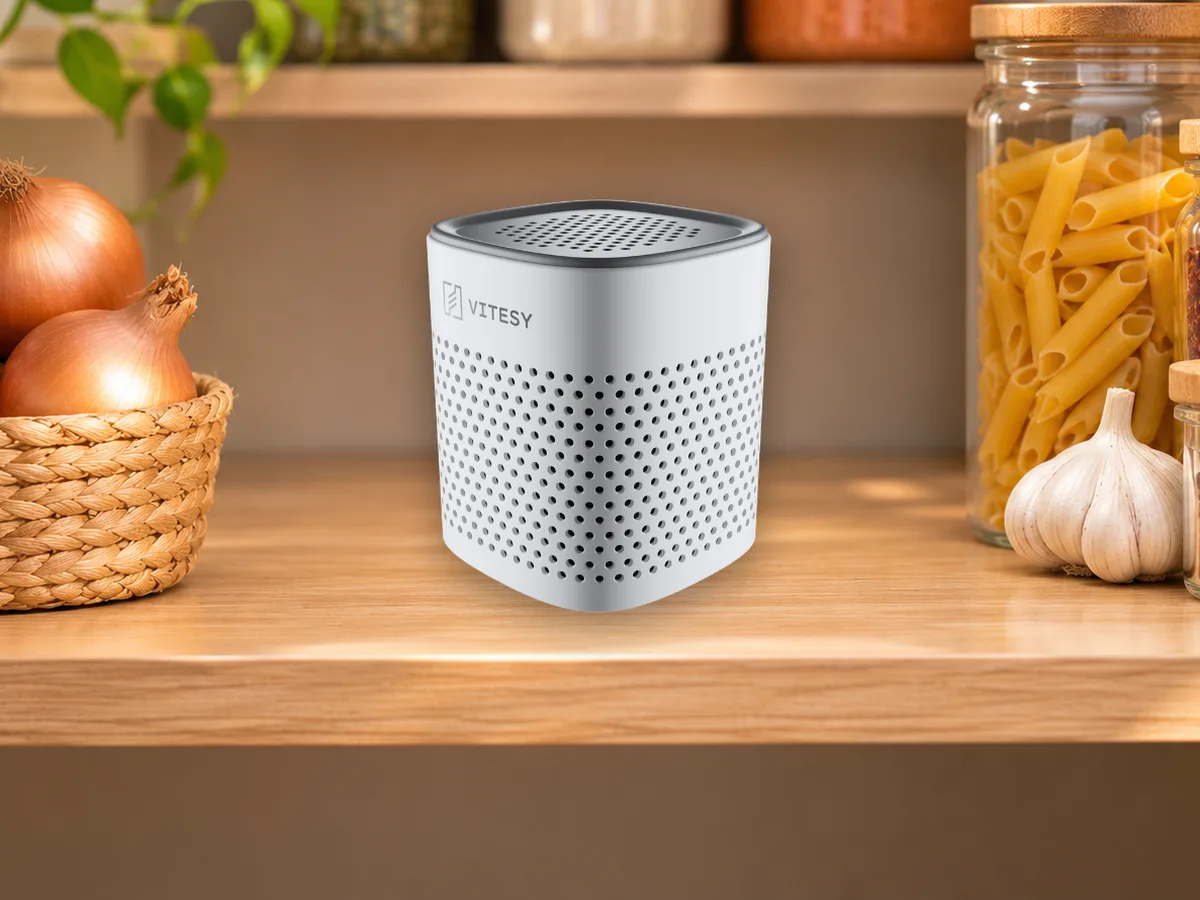
Onions, garlic and spices in a closed cupboard, or a bin under the sink, can leave a smell that clings to the doors. Start with the basics: throw out anything soft or sprouting, wipe the shelves and fix any damp. Then Deo can help. It works by passive catalytic oxidation: a ceramic catalytic filter breaks odour molecules down into carbon dioxide and water at room temperature, with no power, batteries, refills or fragrance.
In Vitesy's Deo test report, run in a sealed 60-litre box, methyl mercaptan (a sulphur odour that smells like rotten cabbage) and trimethylamine (fish odour) fell below the 0.01 mg/m³ detection limit within 2 hours. Vitesy's own guide says Deo "may significantly reduce" odours without necessarily eliminating them completely. It works best at 40-80% relative humidity, so fix any leak under the sink first. Use one per small cabinet and leave about 5 cm of space around it.
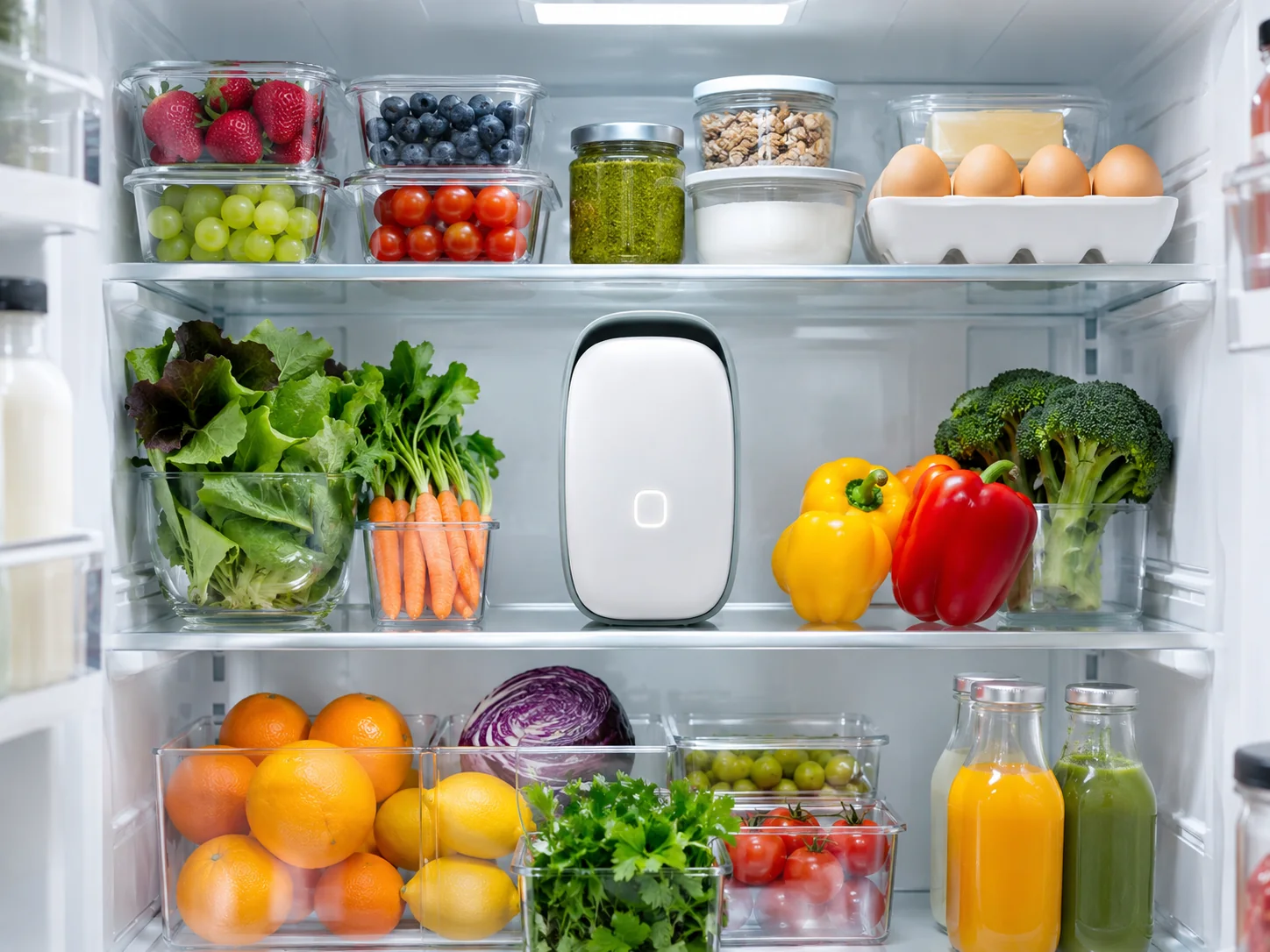
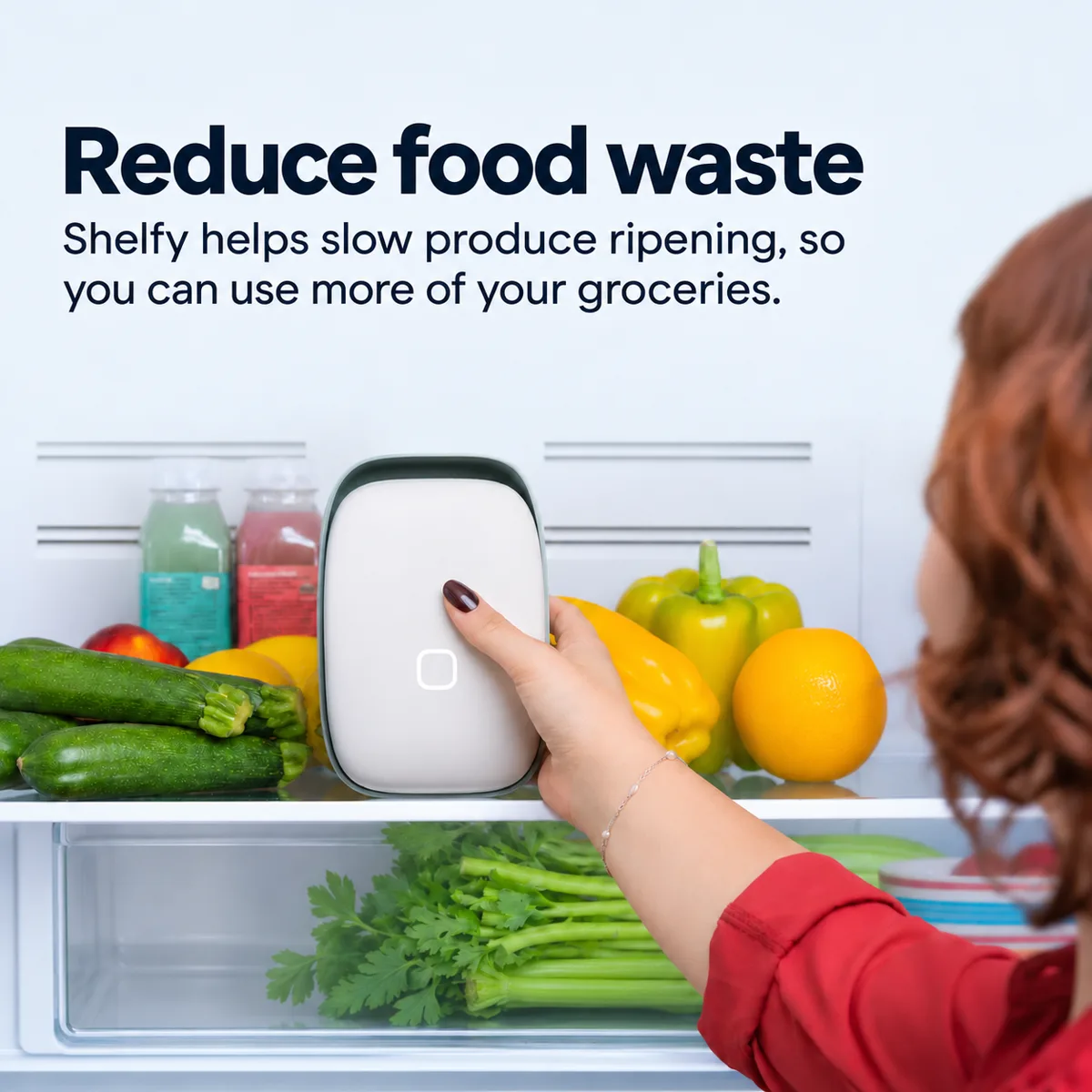
For the fridge itself, Shelfy treats the air around the produce that does belong in the cold, and the Fresh Kitchen Bundle pairs the two. If the smell is coming from the fridge, PRO TECHnology's guide on how to get rid of fridge smell walks through the clean-out. In the UAE, VITESY is distributed by PRO TECHnology, a Dubai company.
Frequently asked questions
What three vegetables should never be refrigerated?
Tomatoes, onions and potatoes. UC Davis lists all three, with garlic, as produce to keep at room temperature: cold dulls tomato flavour and stops pink tomatoes ripening, and dry onions and potatoes keep best in a cool, dark, ventilated cupboard. The exceptions are a cut onion or tomato, which go in the fridge, and potatoes, which the UK Food Standards Agency now accepts in the fridge too.
Should tomatoes be refrigerated?
Not while they are ripening. Keep whole tomatoes on the counter, out of direct sun, until they are ripe; in the fridge, pink tomatoes do not turn red and red ones lose flavour. Cut tomatoes go in the fridge and keep 2-3 days. In a hot UAE kitchen, moving a fully ripe tomato to the fridge is better than letting it spoil.
Can you store potatoes in the fridge?
Yes, according to the UK Food Standards Agency's current advice. It used to warn against it because cold turns some starch into sugar, which can form acrylamide when potatoes are fried, roasted or baked. A study reviewed by the UK Committee on Toxicity found home fridge storage does not materially increase this, so you can choose the fridge or a cool, dark place.
Can onions and potatoes be stored together?
Keep them apart. Clemson University Extension advises storing dry onions in a separate container from potatoes. Onions need dry, airy conditions, while potatoes hold more moisture, so use two baskets or mesh bags in a cool, dark, ventilated cupboard. In a UAE summer, choose a low cupboard away from the oven, dishwasher and sunny walls, and buy smaller amounts at a time.
Should bread be kept in the fridge?
No. Oregon State University Extension says bread goes stale faster at fridge temperatures and advises freezing it instead. Keep a day or two of bread in a bread bin, then slice and freeze the rest and toast slices straight from frozen. In humid UAE weather, freezing early also prevents mould. Bread and bakery are the food UAE residents most often say they waste at home.
How to store onions and potatoes in a hot kitchen?
Find the coolest dark cupboard, usually a low one away from the oven, hob, dishwasher and sun-facing walls, or a cupboard in an air-conditioned room. Keep onions and potatoes in separate ventilated baskets or paper bags, never sealed plastic. Buy smaller amounts in the hot months. If your cupboards still run hot, potatoes can go in the fridge in a paper bag.
Sources
- University of California ANR (UC Davis Postharvest Technology Center): Storing Fresh Fruits and Vegetables for Better Taste, Publication 21590
- Clemson University Cooperative Extension: Selecting & Storing Fruits & Vegetables (HGIC 3483)
- Oregon State University Extension Service: Guidelines for refrigeration of foods (SP 50-677)
- UK Food Standards Agency: Acrylamide (how to reduce acrylamide at home)
- Khaleej Times: First-ever UAE household survey reveals how residents eat, waste food
- VITESY: Deo Test Report (odour, formaldehyde and bacteria tests)