Fridge organisation tips for busy UAE families: a zone-by-zone guide
A big weekly shop, a busy kitchen and several people using one fridge. Here is a zone map, a weekly routine and a 10-minute reset that keep food visible, safe and eaten.
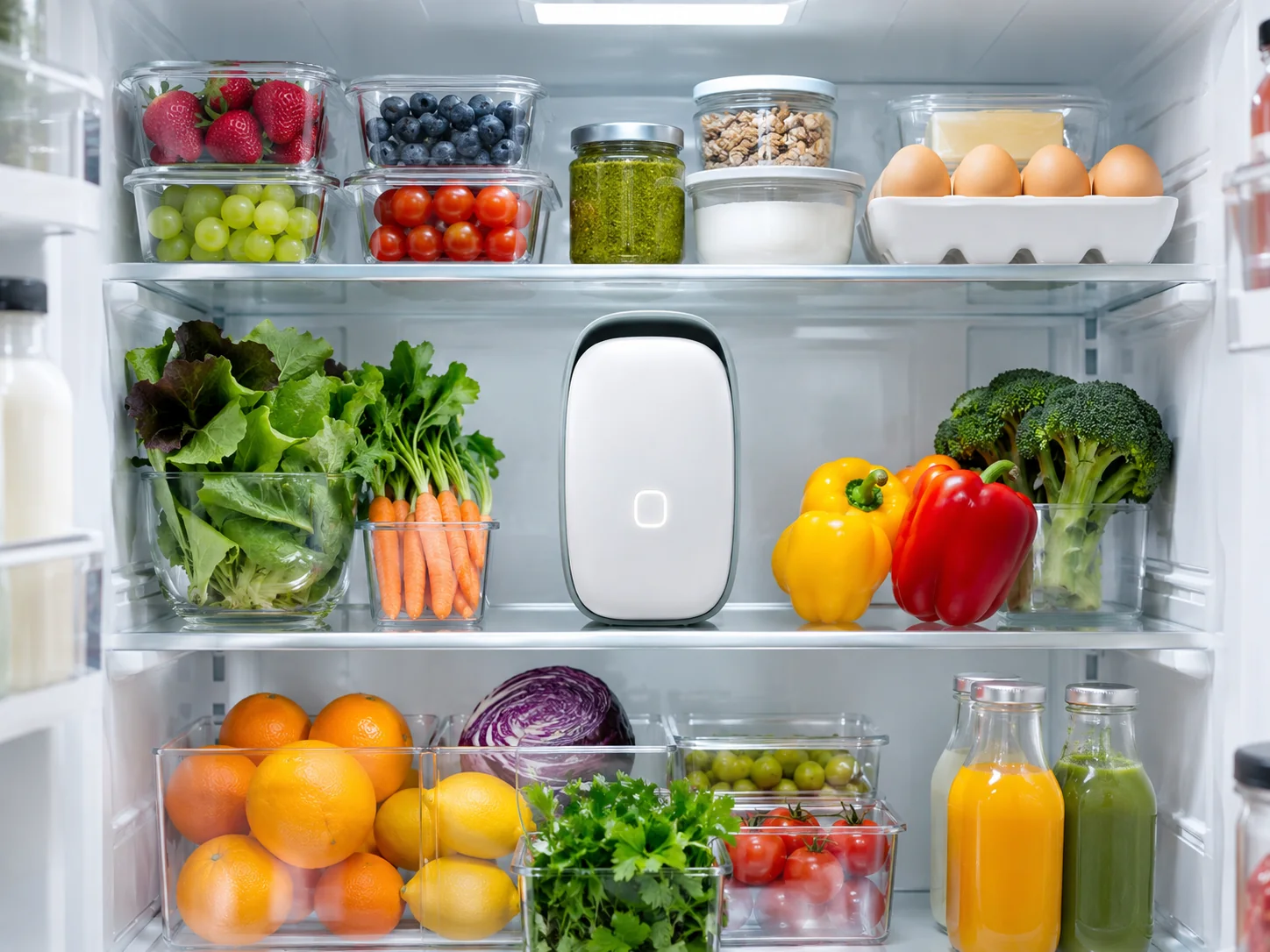
Short answer: Give every zone one job. Use the door for condiments, juices and water; the top shelves for leftovers and ready-to-eat food; the middle for dairy and eggs; the bottom shelf for raw meat and fish in a tray; and one crisper drawer for fruit, the other for vegetables. Keep it at 4 °C or below, with gaps for cold air.
It sounds simple until a family-sized shop lands on the counter at the weekend. In Ne'ma's national household survey, 44% of citizens and 30% of expats said they find it hard to fit food into the fridge or freezer, or to remember what is in there. Clear zones fix both: food stays visible, cold air reaches it, and less is forgotten at the back. Forgotten food is a big part of food waste in UAE homes.
What is the correct way to organise a fridge?
Check your fridge manual too, because layouts differ. Two rules never change: the door is the warmest part of the fridge (FDA), and raw food always goes below ready-to-eat food.
| Zone | What goes there | Why |
|---|---|---|
| Door | Sauces, condiments, pickles, jams, juices, water, butter | The warmest spot: fine for foods that cope with temperature swings, not for milk or eggs. |
| Top shelves | Leftovers, cooked dishes, dips such as hummus, other ready-to-eat food | It sits above raw food, so nothing raw can drip onto it. |
| Middle shelves | Milk, laban, yoghurt, cheese, eggs in their carton | Steadier than the door; the FDA advises keeping eggs in their carton, not on the door. |
| Bottom shelf | Raw meat, chicken and fish in their packaging or sealed containers, on a tray; meat thawing for tomorrow | The UK Food Standards Agency advises the bottom shelf so raw juices cannot drip onto other food. |
| Fruit drawer (low humidity) | Apples, pears, ripe avocados, cut melon | Low humidity suits produce that rots; these fruits give off ethylene. |
| Vegetable drawer (high humidity) | Leafy greens, lettuce, herbs (not basil), carrots, broccoli | High humidity suits produce that wilts. |
| Outside the fridge | Bananas, mangoes, whole melons, tomatoes, potatoes, onions, garlic, basil | These keep better at room temperature (UC Davis). Store onions and potatoes in a ventilated pantry, potatoes away from light. |
More in what not to refrigerate: onions, potatoes and tomatoes.
How to organise fridge drawers
If your crisper drawers have a humidity slider, set the vegetable drawer to high for things that wilt, such as leafy greens and herbs, and the fruit drawer to low for things that rot, such as apples, pears and avocados (Colorado State University Extension). Keep them apart: ripening fruit gives off ethylene, which speeds up spoilage in lettuce, cucumbers, carrots and broccoli. Use perforated bags, not sealed ones, and do not pack drawers so tightly that air cannot move.
A weekly routine for the big family shop
- Check before you go. Photograph the fridge, move anything close to its date to the front, and build the list around what is already there.
- Unpack cold food first. A car boot heats up fast in a UAE summer, and perishable food should not sit out for more than 2 hours, or 1 hour above 32 °C (USDA).
- Old to the front, new to the back. First in, first out, on every shelf and in every drawer.
- Wash, dry, then store, only when it helps. Most produce lasts longer washed just before eating (UC Davis). If you prep greens or herbs ahead, dry them thoroughly first.
- Decant and label. Put leftovers and opened food in clear containers, with masking tape showing what it is and the day it was cooked or opened.
- Portion and freeze. Raw meat and fish you will not cook in the next day or two go into the freezer in flat, dated, meal-sized bags. Thaw them in the fridge on the bottom shelf, not on the counter (Food Standards Agency).
- Leave gaps. The FDA advises against crowding the fridge so tightly that air cannot circulate. If it is full, move drinks out first.
- Check the temperature. Fridge at or below 4 °C, freezer at -18 °C (FDA). A fridge thermometer checked once a week tells you more than the dial.
Ramadan and Eid: organising the fridge for hosting
Ne'ma found that citizens are more likely than expats to have food left over after large gatherings (21% vs 13%), and 65% of citizens say hospitality matters even if food is wasted. These habits keep the generosity without the waste:
- Clear a shelf before guests arrive for platters, desserts and dishes cooked ahead.
- Batch-cooked dishes: divide large pots into smaller, shallow containers so they cool faster, and refrigerate them within 2 hours of cooking (USDA).
- Iftar leftovers: label each container with the date, keep them on the top shelf, and eat them within 3 to 4 days or freeze them for suhoor later in the month. More in how long leftovers last in the fridge.
- Drinks and extras: move water, juices, laban and jallab to a second fridge or a cool box, so the main fridge is not opened every few minutes.
Homes with domestic helpers: one fridge map everyone follows
In many UAE homes, the person who stores and cooks the food is not the person who bought it. Ne'ma found domestic workers carry more responsibility for storing, preparing and disposing of food, and 22% of those surveyed said they cannot see what is in the fridge. A simple map on the fridge door does most of the work:
- One page with a box for each zone, using pictures as well as words, in English or Arabic and the helper's first language.
- The three rules that matter most: raw meat on the bottom shelf, every leftover labelled with a date, and the "eat first" box used first.
- A 5-minute walk-through together after each big shop, so questions get asked before food is lost.
Fridge storage containers: what is worth using
You do not need a matching set of fridge organisers. A few pieces do most of the work:
- Clear, rectangular, stackable containers with tight lids for leftovers and prepped food. You see what is inside, and rectangles waste less space than round tubs.
- A lipped tray or deep container for raw meat and fish on the bottom shelf.
- An open "eat first" bin on a middle shelf for opened jars, half-used vegetables and anything close to its date.
- A turntable or slim door organiser for sauces and jars, so nothing hides at the back.
- Perforated produce bags for the crisper drawers, as UC Davis recommends for refrigerated fruit and vegetables.
Choose containers made for food use, and leave space between them so air can circulate.
The 10-minute weekly reset
- Bin anything spoiled or past its use-by date, and any leftovers older than 3 to 4 days (USDA).
- Move food close to its date into the "eat first" bin and plan tomorrow's meal around it.
- Wipe spills straight away and clean the fridge regularly (FDA); one shelf or drawer a week keeps it manageable. For lingering smells, wipe the inside with a baking soda solution (USDA); PRO TECHnology's guide on how to get rid of fridge smell covers the full routine.
- Check the thermometer reads 4 °C or below.
- Write next week's shopping list from the gaps.
Where Shelfy and Deo fit in a family fridge
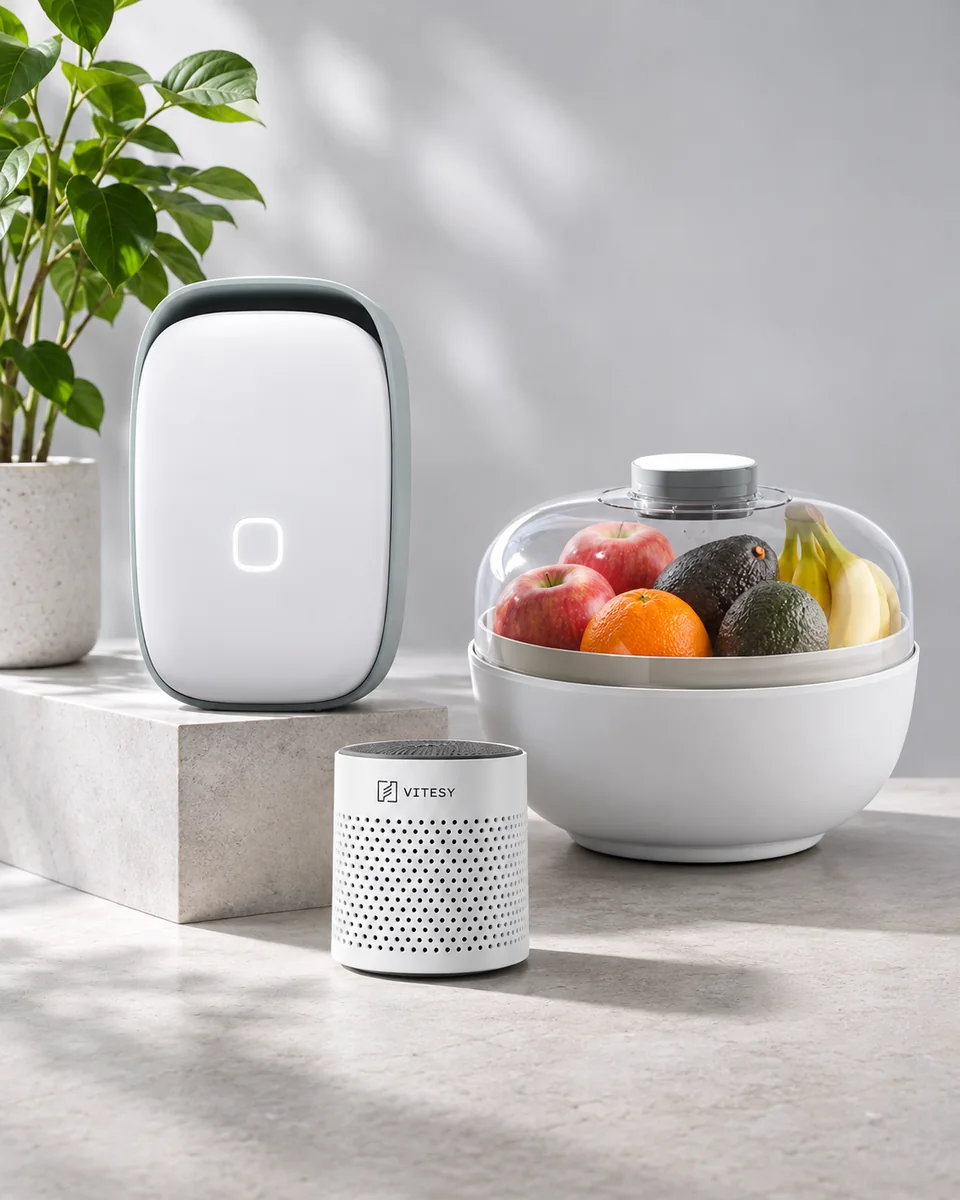
Zones and temperature do the heavy lifting. For extra help, the Fresh Kitchen Bundle puts one device in the fridge and one where smells collect:
- Shelfy, a fridge air purifier, sits on the middle shelf in Eco mode or in the vegetable drawer in Crisper mode, and Vitesy suggests Performance mode after a big shop. Vitesy recommends one per about 300 litres and two above 350 litres. In Vitesy's lab tests on the original Shelfy model, at 6 °C with an avocado as an ethylene source, strawberries lasted 10 days instead of 3. Vitesy says it acts on the air, not the food, and results may vary.
- Deo is a passive odour eliminator with no fragrance or power, for a second drinks fridge or the cupboard by the bin. Leave about 5 cm of space around it. Vitesy's own guide says it may significantly reduce odours without necessarily eliminating them completely.
In the UAE, VITESY is distributed by PRO TECHnology, a Dubai company.
Frequently asked questions
What is the correct way to organise a fridge?
Give each zone one job. Keep condiments, juices and water in the door, leftovers and ready-to-eat food on the top shelves, dairy and eggs in the middle, raw meat and fish in a sealed container or tray on the bottom shelf, and fruit and vegetables in separate crisper drawers. Keep the fridge at or below 4 °C and leave space for air to circulate.
Where should raw meat go in the fridge?
On the bottom shelf, in its packaging or a clean sealed container, ideally on a tray. The UK Food Standards Agency advises this so raw juices cannot drip onto food that will not be cooked. Thaw frozen meat on the same shelf rather than on the counter, and freeze raw meat or fish you will not cook within a day or two.
Should milk and eggs go in the fridge door?
No. The door is the warmest part of the fridge, and the US FDA advises keeping eggs in their carton inside the fridge rather than on the door. Milk also does better on a middle shelf, where the temperature is steadier. Use the door for condiments, sauces, juices and water, which cope better with the temperature swings each time it opens.
How to organise fridge drawers?
Use one crisper drawer for fruit and one for vegetables. If the drawers have humidity settings, set the vegetable drawer to high humidity for things that wilt, such as leafy greens and herbs, and the fruit drawer to low humidity for things that rot, such as apples, pears and avocados. Keeping them apart also protects vegetables from the ethylene that ripening fruit gives off.
Is it bad to overfill the fridge?
Yes. The US FDA advises against crowding the fridge or freezer so tightly that air cannot circulate, because cold air needs to move around food to keep it at a safe temperature. After a big family shop, move drinks to a second fridge or cool box, remove bulky outer packaging, and freeze what you will not use in the next few days.
What are the best fridge storage containers?
Clear, rectangular, stackable containers with tight lids work well for leftovers and prepped food, because you can see what is inside and they use space efficiently. Add a lipped tray for raw meat on the bottom shelf, an open eat-first bin for food to use soon, and perforated bags for produce in the crisper drawers. Label everything with the date.
Sources
- US FDA: Are You Storing Food Safely?
- Food Standards Agency (GOV.UK): How to chill, freeze and defrost food safely
- Colorado State University Extension: Maximizing Fruits and Veggies
- USDA FSIS: Leftovers and Food Safety
- UC Davis Postharvest Technology Center (UC ANR): Storing Fresh Fruits and Vegetables for Better Taste
- Ne'ma: How the UAE Eats, findings from the UAE's first national household food waste survey (2023)